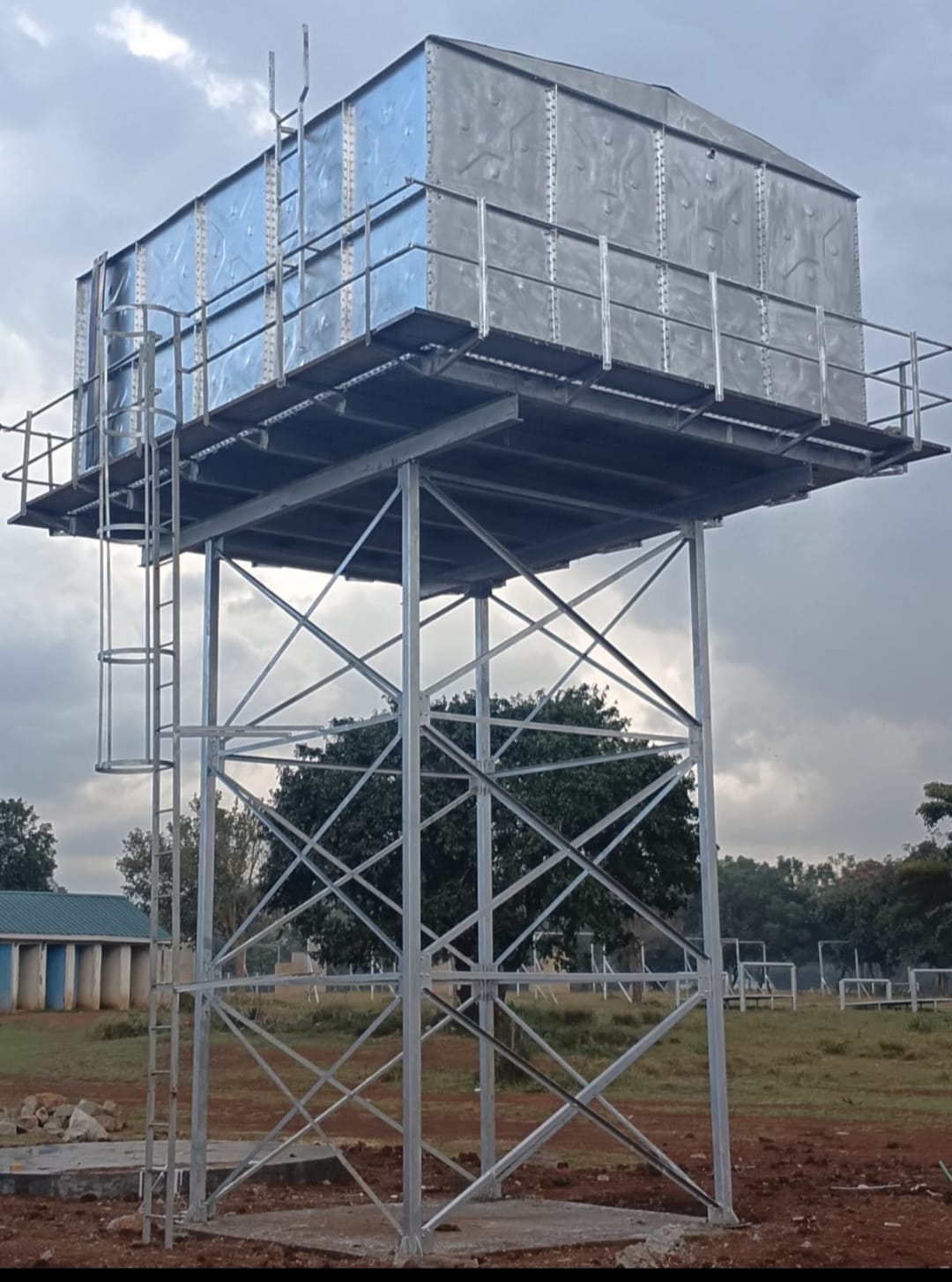
Steel Water Tower Fabrication in Nairobi, Kenya.
Waterline Drillers fabricates and installs steel water towers for borehole and water-storage systems serving homes, farms, institutions, commercial properties and other sites requiring elevated water storage and gravity-assisted distribution.
What Determines the Right Water Tower for Your Property?
A water tower should not be fabricated around appearance alone. Its design needs to consider the tank capacity, required elevation, site conditions, intended water use and the complete distribution system that the tower will support.
Tank Capacity
The amount of water to be stored influences the loads that the tower structure must be designed to support. Larger storage requirements therefore need to be considered from the beginning.
Required Tower Height
Elevation affects how water is delivered from the tank to the property. The required height should reflect the intended distribution arrangement, pressure needs and surrounding site levels.
Site Conditions
Available space, ground conditions, accessibility and the location of the borehole, tank and distribution lines all influence where the tower can be positioned and how it should be installed.
Water Distribution
The tower should be planned around where the water must ultimately go, whether that is a home, farm, institution, livestock system, irrigation line or commercial property.
Structural Requirements
Tower dimensions, steel members, bracing, connections and support arrangements should be selected according to the intended tank load, height and site requirements.
The objective is not simply to raise a tank off the ground. The tower should support the required storage safely while placing the water at an elevation that works with the intended distribution system.
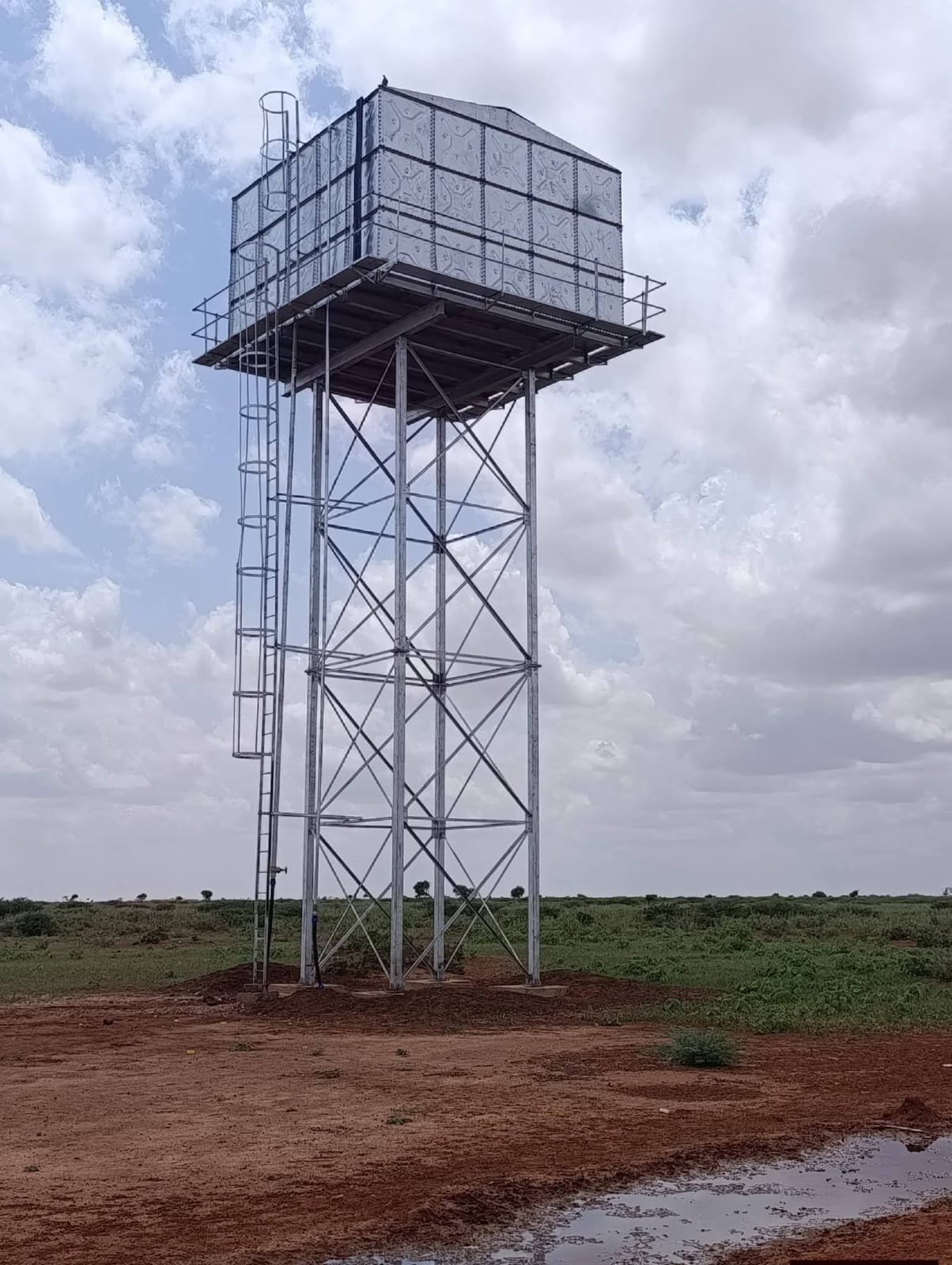
The structure should be fabricated around the intended storage load and the elevation required for the property's water-distribution system.
From Steel Fabrication to an Installed Water Tower.
Water tower construction involves more than assembling steel members on site. The process starts with the required tank capacity, tower height and site conditions, then moves through fabrication, structural assembly, tank placement and connection to the water system.
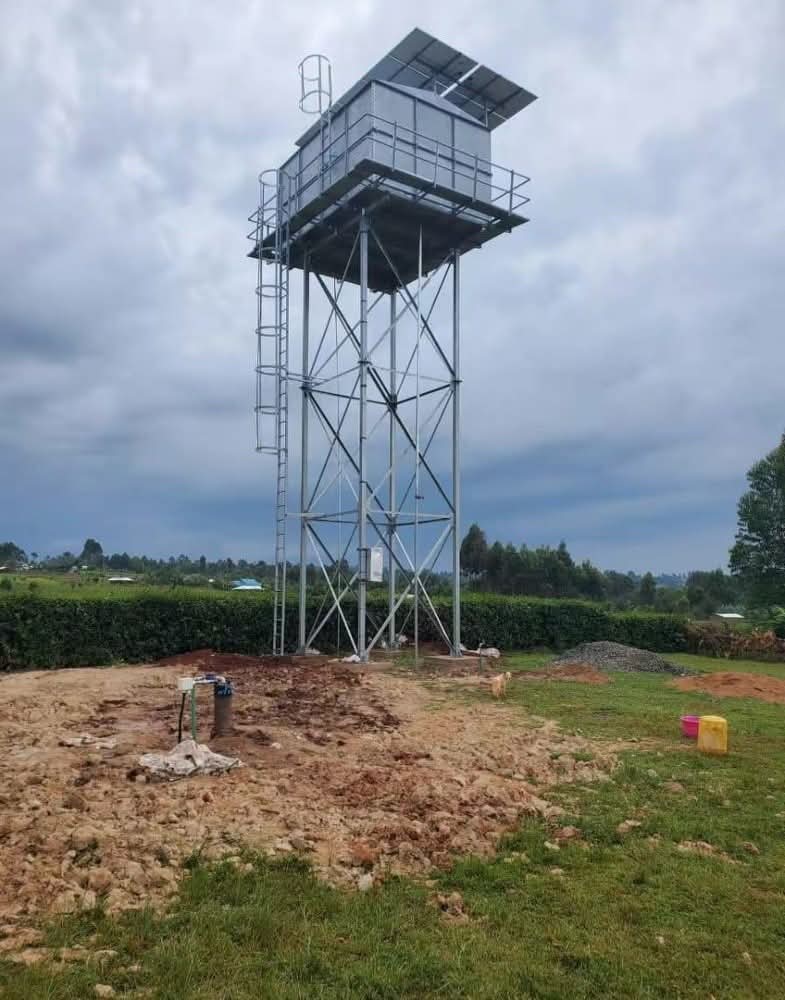
Build the Structure Around the Required Water Load.
Before installation begins, the tower structure is planned around the intended storage capacity, elevation and structural configuration required for the project.
Confirm Tower Requirements
Tank capacity, proposed height, installation location and the intended water-distribution arrangement are established before fabrication.
Prepare the Steel Members
Structural steel components are measured, cut and prepared according to the selected tower configuration and required supporting arrangement.
Fabricate the Tower Structure
Legs, bracing, platform components and connection points are fabricated into the structural elements required for assembly and installation.
The fabrication phase produces the structural components required to support the planned tank capacity and tower configuration.
Assemble, Raise, Position and Connect the Tower.
Once the structural components are prepared, the work moves to the installation site where the tower is assembled and integrated with the required water-storage and distribution system.
Prepare the Installation Area
The selected tower location is prepared with consideration for access, ground conditions, tower footprint and connection to the wider water system.
Assemble & Position the Tower
Fabricated steel components are assembled into the tower structure and positioned according to the planned installation arrangement.
Install Tank & Water Connections
The required storage tank is positioned and the tower is connected to the incoming borehole supply and outgoing water-distribution pipework according to the system design.
The completed installation connects water storage, elevation and distribution into one working system.
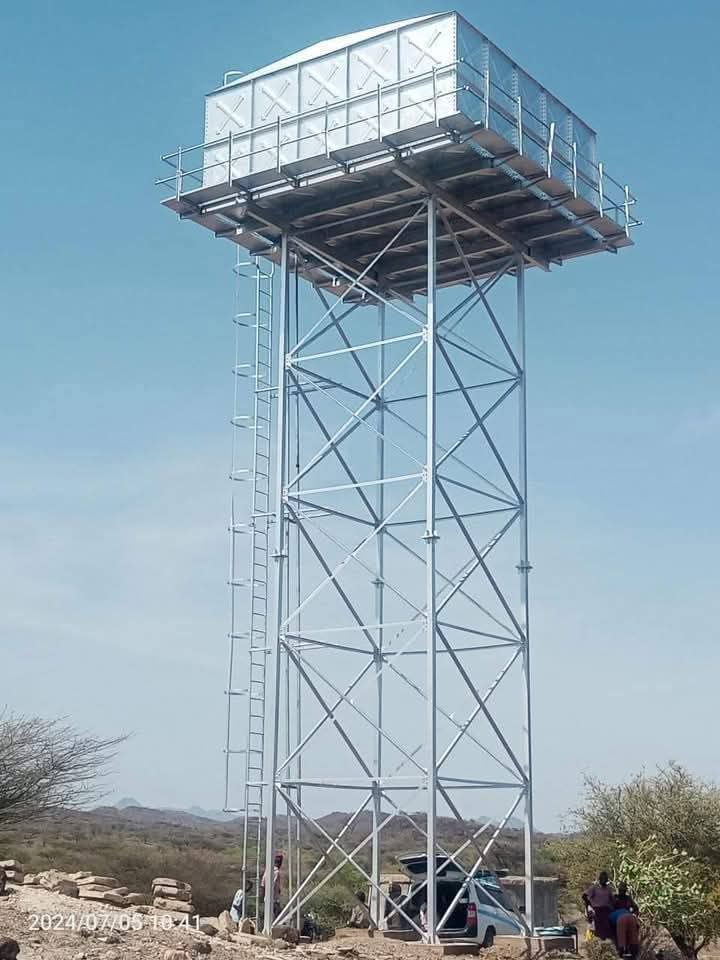
From fabrication through final connection, the objective is a tower that supports the required storage and places water at the elevation needed by the distribution system.
Why Does Water Tower Height Matter?
Elevating stored water can support gravity-fed water distribution from the tank toward homes, farms, institutions and other delivery points. The appropriate tower height depends on the complete water system rather than using one standard height for every property.
The tower raises stored water above its intended distribution points so elevation can support the movement of water through the property.
Water is held above the required distribution area.
The supporting structure establishes the height of the stored water.
Water moves through the planned distribution network.
Water reaches homes, farms, institutions or other required locations.
The Water Still Has Somewhere to Go.
A water tower is part of a wider distribution system. Once the borehole pump fills the elevated tank, the stored water must travel through pipework to the property's actual points of use. Tower height should therefore be considered together with those distribution requirements.
Tower Elevation
The height of the stored water relative to the delivery area influences how gravity can assist movement through the distribution system.
Water Use
The required tower configuration should reflect whether the stored water serves homes, livestock, farms, institutions, commercial properties or another application.
Distribution Distance
The relative position of the tower and the water delivery points should be considered, especially where water must travel across a larger property.
Pipework
Pipe diameter, routing and the layout of the distribution system influence how stored water moves from the elevated tank toward its final use.
Property Levels
Ground level can vary across a site. The relative elevation of the tower, buildings, farm areas and other water points should therefore form part of the planning process.
A taller tower is not automatically a better tower. The appropriate elevation should match the storage, distribution and site requirements of the particular water system.
Tower height, tank storage and the distribution network should work together as one complete water-delivery system.
One Water Tower Design Does Not Fit Every Property.
The required steel water tower, tank capacity and elevation depend on where the water will be used. Residential properties, farms, institutions and commercial sites can have very different storage, distribution and daily water requirements.
Tank capacity, tower height and structural configuration should reflect the real water demand and distribution arrangement of the property.
Homes & Residential Properties
Elevated water storage can provide a practical supply arrangement for homes, compounds and residential developments where borehole water needs to be stored and distributed to household points of use.
Farms & Irrigation
Farms may require larger volumes of stored water for irrigation, livestock, washing or general agricultural use. Tower and tank requirements should therefore reflect the farm's daily demand and distribution layout.
Schools & Institutions
Educational facilities, institutions and similar properties can use elevated tanks as part of a borehole water-storage system serving multiple buildings and water-use points.
Commercial Properties
Commercial sites may require dependable stored water for sanitation, cleaning, operations and general property use. Tank capacity and elevation should match the site's expected demand.
Livestock Water Systems
Elevated storage can support distribution toward livestock watering points where water needs to move from the borehole and tank to different locations across a farm or property.
Community Water Supply
Where a borehole supplies several users or distribution points, the tower and tank should be considered as part of the complete storage and water-delivery arrangement.
Start with the property's water demand. Then determine the storage capacity, tower elevation and distribution arrangement required to support it.
What Determines the Cost of a Steel Water Tower?
There is no single price for every steel water tower in Kenya. The final fabrication and installation cost depends on the tank capacity, required tower height, structural configuration, installation site and the work needed to connect the tower to the water system.
Tank Capacity
The amount of water the tower must support is one of the main design considerations. A larger tank generally changes the structural load and the amount of supporting steel required.
Tower Height
Taller towers can require different structural arrangements, additional steel members, bracing and installation considerations compared with lower tower structures.
Steel & Structural Design
The quantity and configuration of structural steel, including legs, bracing, platforms and connection members, influence the fabrication requirements of the tower.
Site Conditions
Ground conditions, available installation space, access to the site and the selected tower position can affect preparation and installation requirements.
Fabrication Requirements
Custom tower dimensions, structural configuration and other project-specific fabrication requirements influence the amount of work involved before installation.
Transport & Mobilisation
The project location and the movement of fabricated steel components, equipment and installation personnel form part of the overall project scope.
Installation Accessibility
Access around the proposed tower location can influence how fabricated components are moved, assembled and positioned during installation.
Water Connections
Connecting the elevated tank to the incoming borehole supply and outgoing distribution pipework may add additional components and installation requirements to the project.
A useful water tower quotation should be based on the actual project requirements. Quoting only from a photograph or using one standard price without considering tank capacity, tower height and installation conditions can leave important requirements out of the scope.
Tower capacity, elevation and site requirements should be established before preparing the final fabrication and installation quotation.
How much water do you need to store?
Or the water distribution requirement the tower needs to support.
Helps determine mobilisation and site requirements.
Home, farm, institution, commercial property or another water requirement.
Tell us the required tank capacity, project location and intended water use so we can assess the right tower configuration for your project.
Questions to Ask Before Fabricating Your Water Tower.
Choosing the right steel water tower in Kenya means looking beyond the tower itself. Tank capacity, height, site conditions, water distribution and the intended use all influence the final fabrication and installation requirements.
The appropriate tower depends on the required tank capacity, tower height, intended water use, distribution system and site conditions. Water requirements should therefore be established before selecting the tower configuration.
There is no single tower height suitable for every property. The required elevation depends on the storage arrangement, delivery points, site levels, pipework and the water-distribution requirements of the project.
The supported tank capacity depends on the specific tower design and structural configuration. The intended storage load should be established before the tower members, bracing and supporting arrangement are determined.
Yes. A borehole pump can deliver water to an elevated storage tank, after which the stored water can be distributed to the required water points. Pumping head, pipework and tower elevation should be considered together when planning the system.
Elevation influences the pressure available from gravity-fed water distribution. However, the performance of the complete system also depends on pipework, site levels, distribution distance and the requirements of the final water-use points.
An existing tank can be considered when planning a tower, provided its capacity, dimensions and intended use are established so the supporting structure can be designed around the required load.
Yes. Water towers can form part of farm water systems serving livestock, irrigation, washing, domestic use and other agricultural requirements. Tank capacity and distribution needs should be matched to the particular farm.
Water tower cost depends on factors such as tank capacity, tower height, structural steel requirements, fabrication complexity, site conditions, project location, installation access and water-system connections.
Yes. Waterline Drillers is based in Nairobi and handles water-system projects in different parts of Kenya. Project location, transport and mobilisation requirements can be considered when preparing the fabrication and installation scope.
Yes. Waterline Drillers provides services across the borehole water-supply process, including hydrogeological surveys, borehole drilling, test pumping, pump installation, solarization and elevated water-storage solutions.
Need a Water Tower Built Around Your Actual Water Demand?
Tell Waterline Drillers your required tank capacity, project location, intended water use and preferred elevation. We can assess the fabrication and installation requirements for your water-storage system.