Turn Sunlight Into the Power That Moves Your Water.
Borehole solarization connects the pumping system to a properly designed solar power source. The solar array, controller and borehole pump must be matched so the system can convert available sunlight into reliable water pumping for the property's actual demand.
Assess the Borehole Pump
The existing or proposed submersible pump is assessed to establish its electrical requirements and expected pumping duty.
Size the Solar Array
Solar-panel capacity is planned around the pump motor requirements, expected operating conditions and required water production.
Install the Pump Controller
Suitable control equipment manages the power supplied from the solar array to the borehole pump and supports proper system operation.
Pump Water During Solar Hours
Available solar energy powers the borehole pump so groundwater can be lifted and delivered to the required storage or distribution system.
Store Water for Later Use
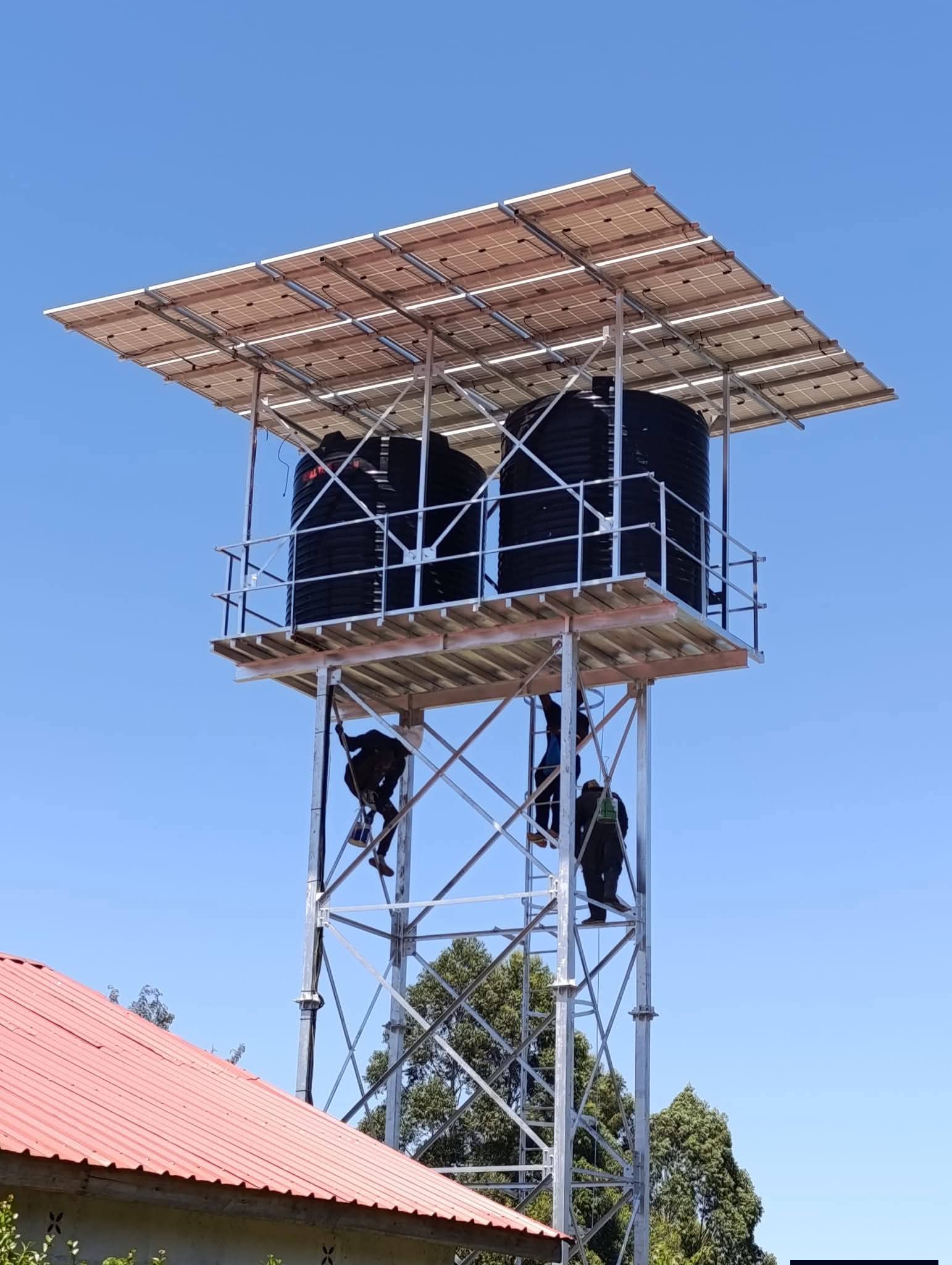
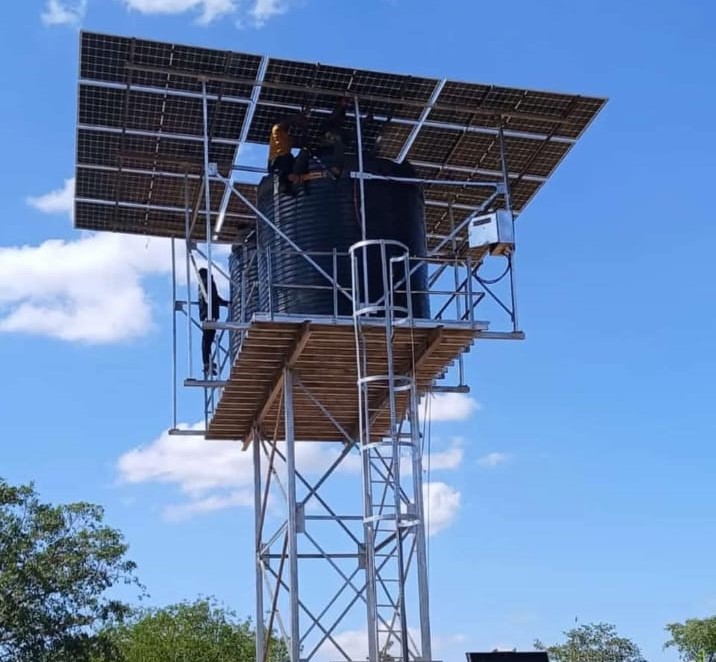
Water can be pumped into a ground tank or elevated water tower so the property has stored water available even when active solar pumping is reduced or stopped.
Simply adding solar panels does not create a properly designed borehole solar system. The solar array, controller, pump performance, daily water demand and storage strategy should be considered together.
Make the Sun Part of Your Water Supply.
Borehole solarization can reduce dependence on grid electricity or generator power by using available solar energy to operate the water pump. A properly designed system connects energy generation, pumping performance and water storage into one practical water-supply solution.
Reduce Dependence on Grid Electricity
Solar pumping allows part or all of the borehole's pumping demand to be supplied from solar energy rather than relying entirely on utility electricity.
Useful for Remote Properties
Farms and properties with limited or unreliable grid access can use a properly sized solar pumping system to operate the borehole during available solar hours.
Pump Water Into Storage
Solar energy can be used during daylight hours to fill ground tanks or elevated water storage, allowing the stored water to serve the property when active pumping is reduced or stopped.
Match Energy Production to Water Demand
A solar borehole system can be designed around how much water the property needs, when that water is required and how much storage is available.
Integrate With an Existing Borehole
Existing borehole pumping systems can be assessed for solarization where the pump, electrical requirements and site conditions are suitable for conversion or system upgrading.
Solarization works best when the system is designed around water demand first and solar capacity second.
How Big Should Your Borehole Solar System Be?
The number of panels required for a solar borehole system cannot be determined from borehole depth alone. Correct solar array sizing for a borehole pump considers the pump motor, pumping head, required water volume, operating hours and available solar energy.
Pump Motor Rating
The selected submersible pump and motor establish the electrical demand that the solar array and pump controller must be capable of supporting.
Total Pumping Head
The system must account for the vertical lift from the pumping water level to the delivery point, together with pressure and pipework requirements.
Daily Water Demand
The amount of water required each day affects how long the pump needs to operate and therefore how much solar pumping capacity is required.
Borehole Performance
The solar pumping rate should remain appropriate for the borehole's tested yield and operating water level rather than exceeding what the borehole can sustainably provide during operation.
Water Storage
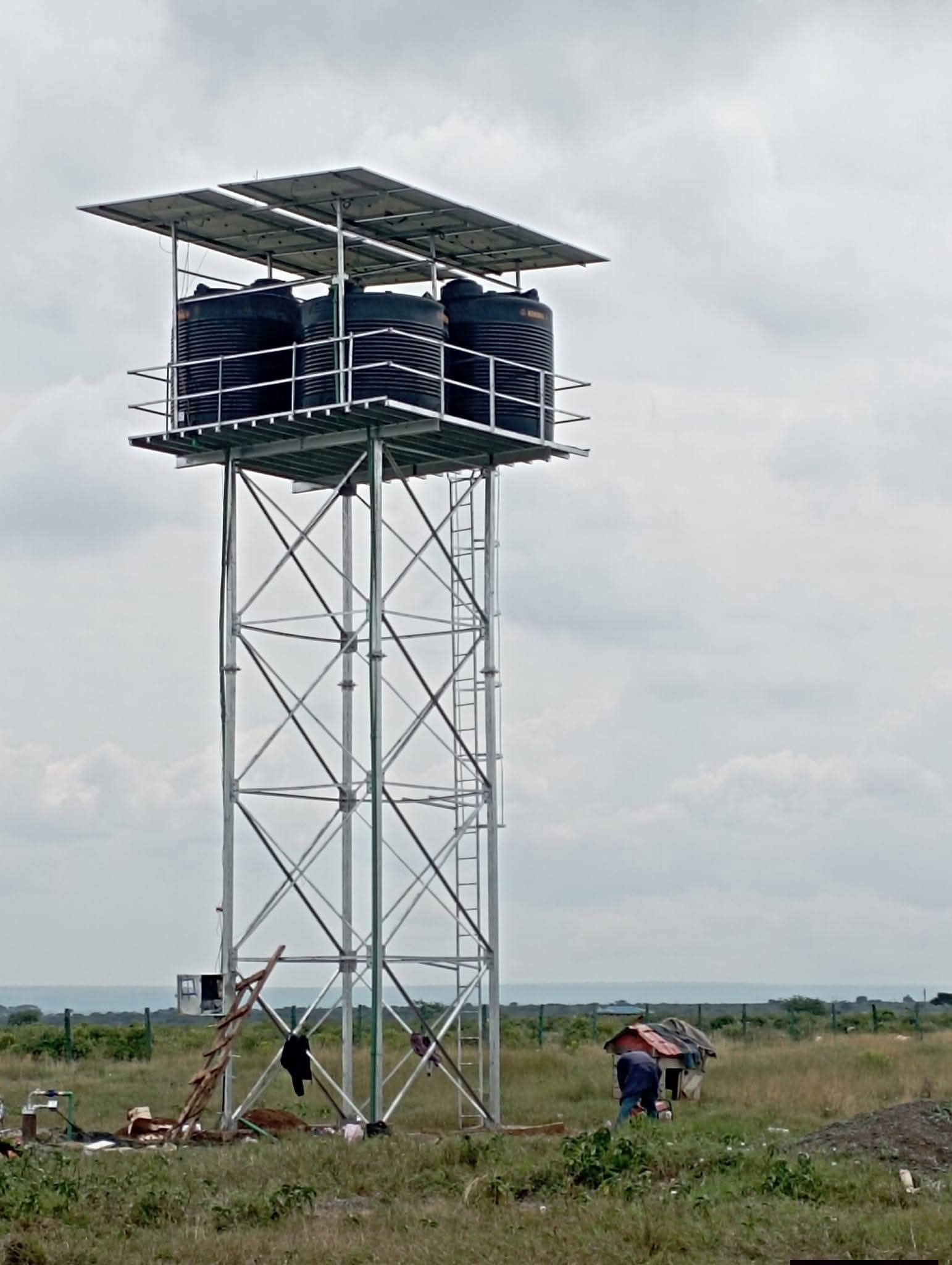
Ground tanks or elevated water towers can allow water to be pumped during strong solar hours and stored for use later in the day or at night.
We do not start by asking, “How many panels do you want?” We start with how much water the system needs to move.
Pump requirements and daily water demand come first. Panel capacity and controls are then selected to support those operating conditions.
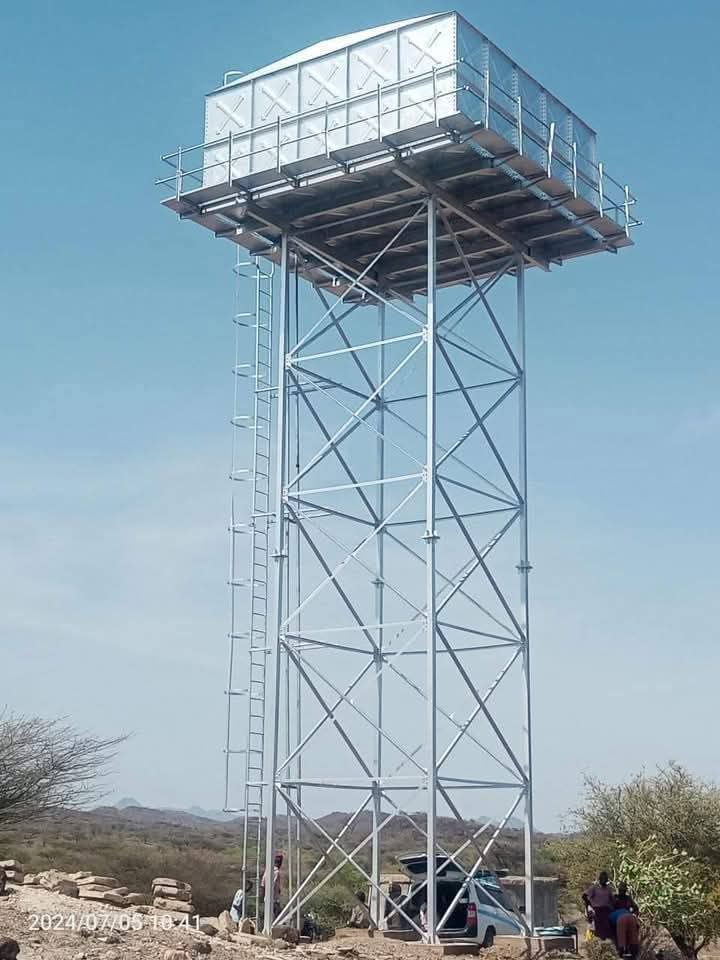
Pump During the Day. Store Water for When You Need It.
A solar borehole does not necessarily need to pump at exactly the same moment the water is being consumed. During productive solar hours, water can be pumped into ground storage tanks or elevated water towers and then supplied to the property when required.
The Tank Can Be Just as Important as the Solar Panels.
Pump During Strong Solar Hours
The system can make use of available daylight to operate the borehole pump and move water into storage while solar production is available.
Store Water for Evening or Night Use
Stored water can remain available after active solar pumping has reduced or stopped, depending on the capacity and design of the storage system.
Use Elevation for Distribution
An elevated water tower can provide gravity-fed water distribution where the tower height, pipework and property requirements are properly considered.
Size Storage Around Daily Demand
Tank capacity should reflect how much water the property requires, the borehole's pumping capability and the expected solar pumping schedule.
Important: Whether a solar pumping system requires electrical battery storage depends on the specific system design. Water storage can reduce the need to pump continuously, but the correct configuration should be assessed for each project.
Already Have a Borehole? It May Be Possible to Solarize It.
Solarization is not limited to newly drilled boreholes. An existing pumping system can be assessed to determine whether its pump, motor, controls and operating requirements are suitable for conversion to solar power or whether some components should be changed.
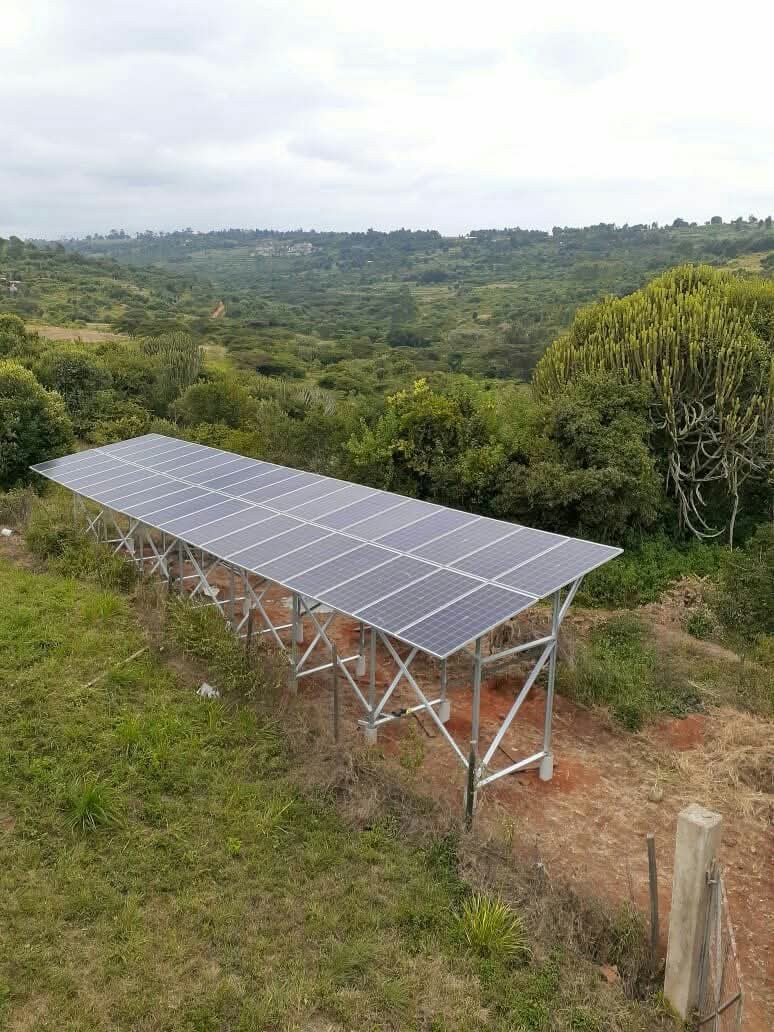
Start With the Existing Pumping System.
The pump motor, borehole performance, electrical requirements, operating depth and current water demand are reviewed before deciding how the system should be solarized.
Match Solar Capacity to the Pumping Requirement.
Where the existing equipment is suitable, solar panels and control equipment can be designed around it. Where it is not, the pumping equipment can be reviewed as part of the solarization plan.
Not Every Conversion Should Be Designed the Same Way.
An existing borehole may already have a suitable pump, or it may require changes before solar power is integrated. The decision should be based on the actual equipment and water requirements at the site.
Existing Pump
Identify the installed pump, motor rating and electrical characteristics to understand the power requirement that the solar system must meet.
Borehole Data
Available borehole yield, pumping level and installation information help determine whether the current pump remains appropriate for the borehole.
Daily Water Use
Current water demand is considered because the solar pumping schedule and storage capacity should reflect how much water the property actually needs.
Solar Site
Available installation space, orientation, shading and practical panel positioning form part of planning the solar array at the property.
Controls & Storage
The controller, electrical protection and water storage arrangement are reviewed as part of the complete pumping system rather than as separate components.
An existing pump does not automatically need to be replaced. Its suitability depends on its electrical requirements, condition, borehole performance and the solar pumping duty required.
Questions to Ask Before Powering Your Borehole With Solar.
A good solar water system starts with the borehole, pump and required water output — not simply the number of panels. These answers cover some of the most common questions about solar borehole pump installation in Kenya.
Borehole solarization involves powering a submersible borehole pump using a properly designed solar energy system. Solar panels, pump controls and the pumping equipment are matched to the required operating conditions.
Yes. Existing boreholes can be assessed for solarization. The installed pump, motor, borehole performance, daily water requirement and existing controls should be reviewed before deciding whether the current equipment can remain in use.
The required number and capacity of panels depend on the pump motor rating, pumping head, expected operating conditions, daily water requirement and the characteristics of the selected solar equipment. There is no single panel quantity suitable for every borehole.
Not every solar borehole system requires electrical battery storage. Many systems can pump water during productive solar hours and store the water in a ground tank or elevated water tower for later use. The correct arrangement depends on the project.
Solar power can operate suitable borehole pumps, including systems with significant pumping head, provided the pump, motor, controller and solar array are correctly designed for the required duty. Borehole depth alone does not determine the system.
Solar energy availability changes with weather conditions and time of day. Pumping performance therefore depends on the system design and available solar energy. Properly planned water storage can help maintain water availability when active pumping is reduced.
Yes. Solar borehole pumping can be used for farms, livestock water supply and suitable irrigation applications. The system should be sized around the required water volume, pumping head, borehole performance and irrigation or storage arrangement.
Yes. A solar borehole pump can deliver water to an elevated storage tank or water tower. The tower height and delivery head should be considered when sizing the pump and the solar pumping system.
Solarization cost depends on factors such as the pump motor rating, required solar capacity, controller, mounting requirements, existing equipment, water demand and site conditions. A site-specific assessment is therefore more reliable than using one fixed price.
Yes. Waterline Drillers is based in Nairobi and handles borehole and water-system projects in different parts of Kenya. Project location and mobilisation requirements can be considered when preparing the solarization scope.
Turn Kenya's Sun Into Reliable Water Pumping.
Whether you are planning a new borehole pumping system or converting an existing installation, Waterline Drillers can assess the pump requirements, solar capacity, controls and water storage needed for the project.