The right submersible pump turns a successful borehole into a useful water supply. The wrong pump can waste power, fail to meet demand or cause excessive drawdown. Proper borehole pump installation in Kenya therefore starts with data from the completed and tested borehole.
Start with the borehole test report
Pump selection should follow test pumping. The report provides borehole yield, water levels, drawdown and recovery information. The pump should respect the sustainable operating conditions of the borehole.
Understand total dynamic head
A pump does more than lift water from the borehole to ground level. It may also push water uphill, raise it to an elevated tank and overcome friction in pipes and fittings. These requirements combine into the pumping head the pump must overcome.
Match flow rate to real demand
A home, apartment, institution, farm or commercial property can require very different water volumes. Storage can help because the borehole pump can fill a tank steadily while users draw water during peak demand.
Do not select a pump by horsepower alone
Horsepower or kilowatt rating does not tell you how much water a pump will deliver at the actual head. Pump performance curves show the relationship between flow and head. A smaller correctly selected pump can outperform a larger poorly selected pump.
Pump installation components matter
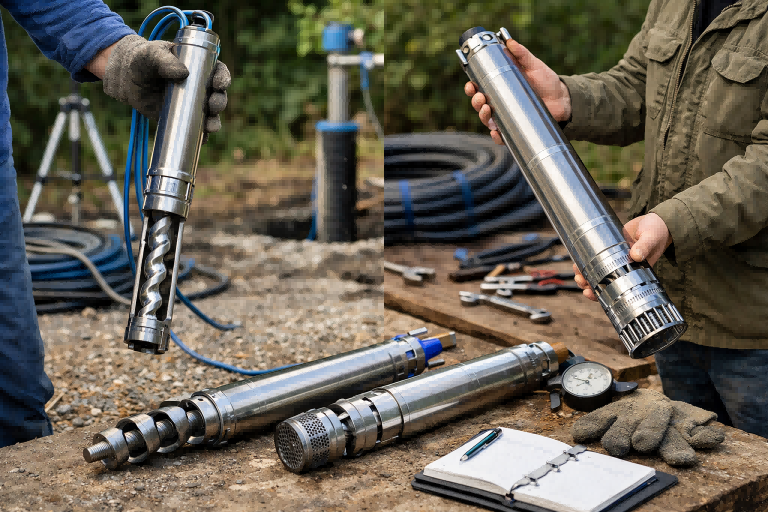
Professional pump installation can include the submersible pump, motor, rising main, submersible cable, controls and water-level protection.
Supporting components should suit depth, pressure and motor load. Small specification shortcuts can place an expensive pump at risk.
Use water-level and dry-run protection
A pump should not continue running when the borehole water level falls below a safe point. Appropriate level protection can help prevent damage, especially on automated systems.
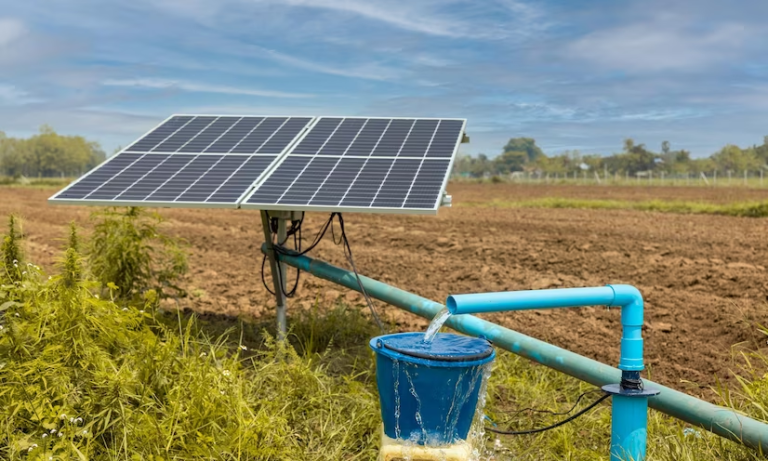
Plan for solar before buying the pump
If solarization is planned, tell the installer before finalizing the pump. Pump power and control requirements directly influence solar-array sizing.
Designing the pump and solar system together is usually more efficient than adapting unsuitable equipment later.
Think about storage and operating schedule
A correctly sized water tower or tank allows the pump to run in planned cycles instead of starting for every small demand. This works particularly well with solar pumping.
Common pump-selection mistakes
- Buying based only on horsepower
- Ignoring test-pumping results
- Ignoring tank height
- Using undersized pipework
- Installing no water-level protection
- Buying a pump before deciding on solar
- Ignoring storage
- Using unsuitable cable for depth and motor load
Treat the pump as part of a complete system
The best borehole pump is the one that works efficiently with the borehole, pipework, power source, storage and daily demand.
If your borehole has already been tested, contact Waterline Drillers with the site details and test information.
Why pump curves matter
Every centrifugal or submersible pump has a performance curve that shows how much water it can deliver at different heads. As the head increases, the available flow generally changes. This is why a pump that performs well in a shallow installation may deliver much less water in a deeper borehole with a high tank.
The installer should use the required duty point—flow at the actual total head—to select the pump. Looking only at motor horsepower can lead to poor efficiency or inadequate delivery.
Pipe size can change pump performance
Water loses pressure as it travels through pipework. Long runs, small pipe diameters, many bends and high flow rates increase friction losses. If these losses are ignored, the pump may operate at a different point from the one intended during selection.
Pipe sizing should therefore be considered at the same time as pump sizing, especially when the tank is far from the borehole or the system serves irrigation and other high-flow uses.
Electrical cable and controls are part of the engineering
Submersible motors may be installed far below ground, so cable length and conductor size matter. Excessive voltage drop can affect motor performance and reliability. The control panel should also suit the motor and include the protection required for the installation.
- Overload protection
- Dry-run or low-water protection
- Correct cable sizing
- Appropriate switching and isolation
- Float or tank-level control where required
Why storage can allow a smaller, better-matched pump
If a property has very high short-term demand, it may be tempting to choose a large pump. Storage can provide a better solution. The borehole pump fills the tank steadily at a rate the borehole can support, while users draw from the tank at higher peak rates.
This can reduce pump oversizing, improve operating efficiency and make solar pumping easier because the pump can run for longer daylight periods instead of chasing every demand spike.
When should a borehole pump be reviewed?
Review the pump when water demand changes significantly, when a new elevated tank is installed, when the property converts to solar, when repeated trips or low-flow problems occur, or when test information suggests the existing pump does not match the borehole. Replacing a failed pump with the same model without checking the system can repeat an old sizing problem.
Frequently Asked Questions
What size borehole pump do I need?
Pump size depends on tested yield, water level, total head, required flow and storage.
Can I use any submersible pump?
No. The pump must suit the borehole diameter, required duty point and power supply.
Should I choose the pump before solar panels?
Normally yes. Establish the pump duty first, then size the solar system around the selected pump.
Size the pump from real borehole data
Waterline Drillers provides complete borehole and water solutions from survey and drilling to pumping, solarization and storage. Contact our team to discuss your site.