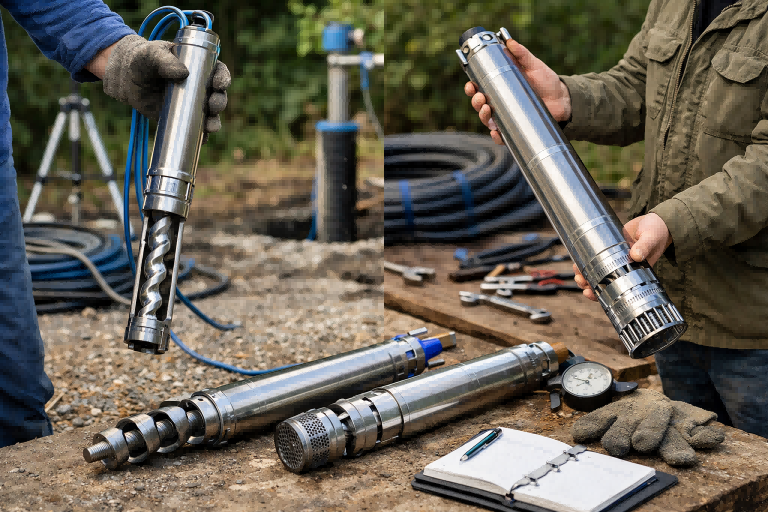
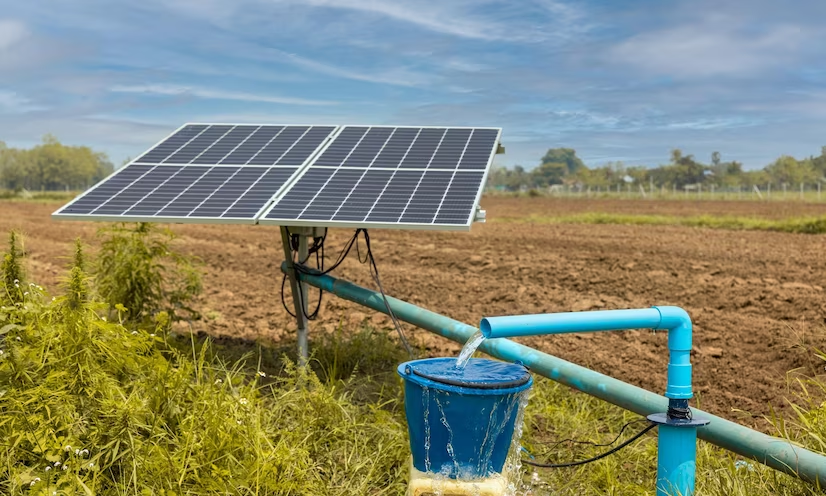
Solar powered borehole pumps are attractive for Kenyan homes, farms, institutions and commercial properties because daytime sunlight can be converted directly into water pumping. However, solarization is not simply a matter of adding panels to any pump. The borehole, pump, solar array, controls and storage should be designed as one system.
How a solar borehole system works
Solar photovoltaic panels generate electricity for the borehole pump through a suitable controller or drive. During useful solar hours the pump lifts groundwater into storage or into the water system depending on the design.
Start with a tested borehole
Before solar sizing, the borehole should have reliable performance information from test pumping. Yield, pumping water level and recovery influence the safe pumping rate and total head.
Select the pump before the solar array
The normal sequence is to define flow and head, select the correct submersible pump, and then design solarization around its electrical requirements.
Buying panels first and trying to match a pump later can create an inefficient system.
What determines the number of panels?
- Pump motor power
- Required daily pumping hours
- Controller or drive requirements
- Panel wattage
- Solar conditions at the site
- Electrical configuration
- System losses and design margin
Why water storage matters
A water tower or tank can make solar pumping much more practical. Pump during the day and use stored water in the evening, early morning or during short periods of low sunlight.
Benefits of solar borehole pumping
- Reduced grid dependence
- Useful for remote sites
- Good fit for daytime tank filling
- Lower exposure to recurring electricity costs
- Can work well with gravity storage
- Scalable when future demand is planned
Solar does not mean zero maintenance
Panels need to stay clean, mounting structures must remain secure, electrical connections should be protected and the pump must still be operated within safe borehole limits.
When hybrid or backup power may help
Some institutions, businesses or livestock operations cannot tolerate water interruptions. Depending on demand and storage, grid or generator backup may be considered alongside solar.
Solar boreholes for farms
Farms can benefit strongly because irrigation and livestock water demand often occur during daylight. Read our guide to borehole drilling for farms in Kenya.
Can an existing borehole be converted to solar?
Often yes. The first step is to identify the existing pump model, motor rating, pumping head, borehole performance and daily water requirement. In some cases the existing pump can remain; in others a different pump may produce a better solar system.
Contact Waterline Drillers with the existing pump details for assessment.
Solar sizing should begin with daily water volume
Two sites can use the same pump but need different solar designs if one must pump for two hours a day and the other for eight. Daily water volume influences the required pumping window and therefore the practical solar-array capacity. The designer should consider how many litres must be delivered to storage during the available solar period.
This is especially important on farms and institutions where demand can change by season or occupancy.
Direct solar pumping versus batteries
Many borehole systems can avoid large battery banks by using direct solar pumping during daylight and storing water instead of electricity. Water tanks are durable, easy to understand and often already required as part of the water system.
Batteries may still make sense in specific applications, but they add cost, maintenance and replacement considerations. The correct choice depends on whether night-time pumping is truly necessary or whether stored water can meet after-dark demand.
Panel location can make or break performance
Solar panels need good exposure to sunlight and should avoid persistent shading from trees, buildings, water towers or other structures. Even a technically correct panel count can perform poorly if the array is shaded during important pumping hours.
- Choose a location with strong solar exposure.
- Use secure mounting against wind and theft.
- Keep panels accessible for cleaning.
- Protect electrical cables from damage.
- Allow room for safe maintenance.
Storage is the hidden strength of a solar borehole
A well-sized tank gives the system flexibility. On a bright day, the pump can fill storage ahead of demand. When clouds reduce output or users need water after sunset, the tank continues serving the property. Elevated storage can also provide gravity pressure without running another pump continuously.
Do not assume every existing pump is ideal for solar conversion
An existing AC pump may be technically usable with a suitable drive, but another pump may deliver the required water more efficiently from the available solar array. Before conversion, check the pump model, motor rating, operating head, tested borehole yield and daily demand. A conversion should be designed from those facts rather than from the number of panels a client hopes to buy.
Frequently Asked Questions
How many solar panels do I need?
The number depends on pump power, controller requirements, operating hours and panel wattage. There is no reliable one-size-fits-all answer.
Can a solar borehole pump run at night?
Direct solar pumping normally relies on sunlight. Water storage is commonly used so water pumped during the day is available later.
Can an existing borehole be solarized?
Often yes, after assessing the existing pump, borehole performance and required water demand.
Turn sunlight into dependable water pumping
Waterline Drillers provides complete borehole and water solutions from survey and drilling to pumping, solarization and storage. Contact our team to discuss your site.