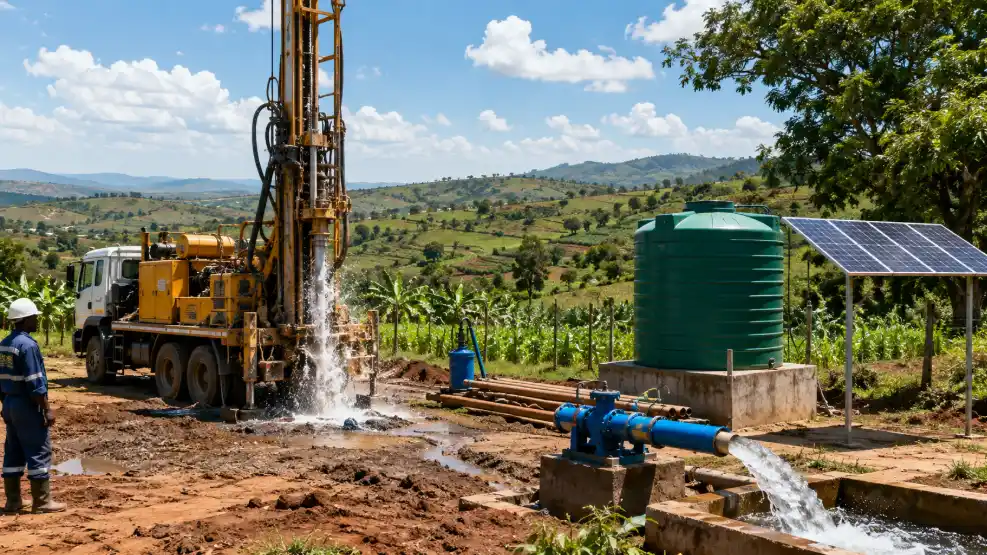
The cost of a borehole in Kenya is not one fixed figure. The final budget depends on site geology, expected depth, drilling conditions, casing, mobilization, test pumping, pump equipment, power source and water storage. Comparing only a per-metre drilling rate can therefore give a misleading picture of the real project cost.
What determines borehole drilling cost in Kenya?
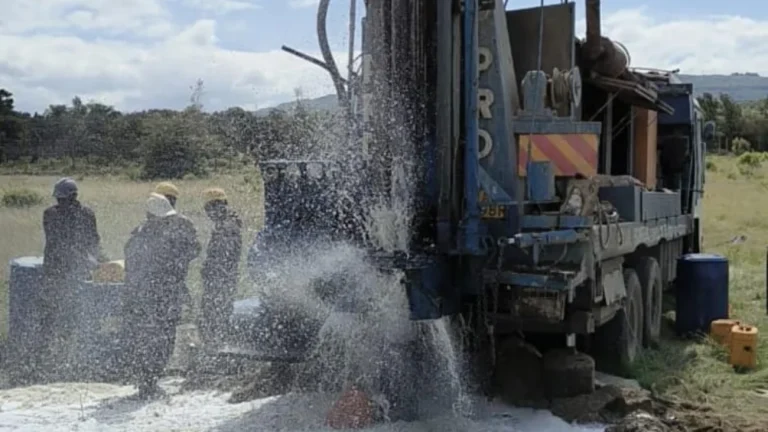
Depth is one of the biggest cost drivers because drilling is commonly charged according to metres drilled. However, two boreholes of the same depth can still cost differently because hard rock, unstable formations and difficult access affect drilling time and construction requirements.
Published 2026 market guides show broad drilling-only rates running into several thousand shillings per metre, with many Nairobi and Kenya estimates around roughly KSh 6,000–10,000 per metre depending on geology and scope. Treat online figures as market guidance only, not as a quotation. The correct price comes from a site-specific scope.
- Hydrogeological survey
- Drilling depth and diameter
- Rock formation
- Rig mobilization
- Plain and slotted casing
- Borehole development
- Test pumping
- Pump, motor, pipes and cable
- Solarization
- Water tower or steel-tank storage
Start with a hydrogeological survey
Before drilling, a hydrogeological survey helps identify groundwater potential, a suitable drilling point, likely formations and an estimated target depth. It reduces uncertainty and gives the project a stronger basis for planning.
Kenya’s Water Resources Authority says groundwater permit applications include hydrogeological assessment reports and that illegal drilling without authorization is an offence. Review the current WRA permitting process.
Drilling, casing and actual ground conditions
During borehole drilling, actual formations can differ from the survey estimate. Harder formations may slow drilling, while unstable sections can require additional casing. Ask whether the quoted rate includes casing, mobilization, development and other essential items.
An itemized quotation is more useful than a single headline figure because it shows what happens if actual depth changes.
Test pumping is part of the real cost
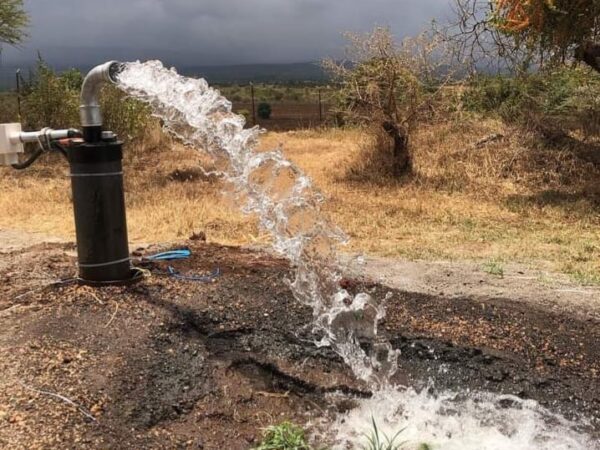
After drilling, test pumping measures yield, drawdown and recovery. This information is critical for selecting a pump that works with the borehole instead of over-pumping it.
A quotation that stops at drilling does not represent the cost of a usable water system.
Pump installation, solarization and storage
Pump installation cost depends on flow, pumping head, motor size, pipework, controls and cable length. Where solar power is preferred, solarization should be designed around the selected pump’s rated power.
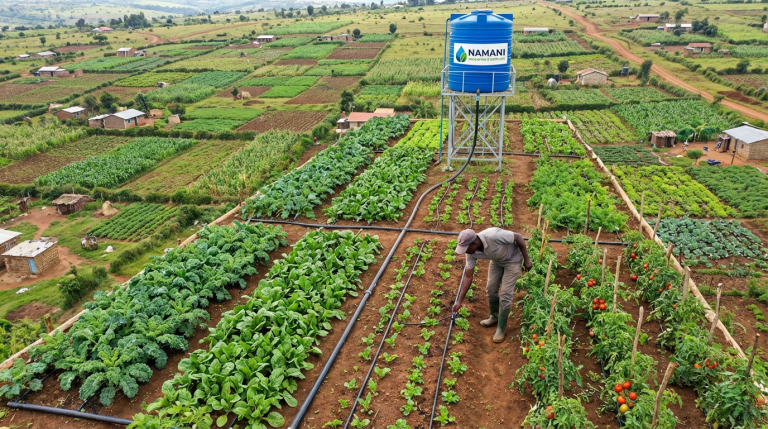
Storage may include a water tower or steel tank. Capacity should be based on real daily demand and the pumping schedule.
Approvals and environmental requirements
Groundwater development is regulated. WRA’s process includes authorization to construct groundwater works, completion records and final water-use permitting. NEMA also lists drilling for utilization of groundwater resources among activities addressed under environmental assessment requirements. Check current guidance from WRA and NEMA before work begins.
How to compare borehole quotations
- Check whether the survey is included.
- Confirm drilling rate and estimated depth.
- Ask which casing specification is included.
- Check mobilization costs.
- Confirm borehole development and cleaning.
- Confirm test-pumping scope.
- Check pump, pipes, controls and cable.
- Separate optional solar and storage costs.
- Confirm approvals and reporting.
- Compare scope line by line, not only the final total.
Budget for the complete water system
The cheapest drilling rate is not automatically the cheapest borehole project. A useful borehole is one that has been properly surveyed, drilled, tested, equipped and connected to a suitable power and storage system.
For a site-specific discussion, review our borehole and water services and contact Waterline Drillers with your location and intended water use.
Example of how the total budget grows beyond drilling
Imagine two property owners who both receive a drilling rate per metre. One assumes that rate represents the whole project, while the other asks for a complete scope. The second owner budgets separately for survey work, mobilization, casing, development, test pumping, pump equipment, power and storage. Even if both contractors quote a similar drilling rate, the second owner has a much clearer picture of the final investment and is less likely to be surprised by essential items after the rig leaves.
This is why a borehole budget should be built in stages. The survey provides an estimated target depth; drilling confirms the actual depth and geology; test pumping confirms performance; then the pump and solar system can be sized from real data. Each stage reduces uncertainty for the next.
Questions that can change the final quotation
Before accepting a quotation, tell the contractor how the water will actually be used. A borehole for one home is different from a system intended to supply apartments, livestock or irrigation. The same borehole may require a very different pump, storage volume and power system depending on the daily demand.
- How many litres of water are required per day?
- Will the water be used for domestic supply, irrigation, livestock or commercial operations?
- How high and how far is the proposed storage tank from the borehole?
- Is three-phase power available, or will the system use solar?
- Does the site have easy access for a drilling rig and compressor?
- Will the project require an elevated tower, ground tank or both?
Why the lowest quotation can become the most expensive
A low initial figure may exclude casing, transport, test pumping, control panels, electrical cable or borehole development. It can also assume a depth that is lower than the survey recommendation. Before choosing, ask every contractor to quote against the same scope. If one company includes a component and another excludes it, adjust the comparison before deciding.
Also ask how variations are handled. Borehole drilling deals with natural geology, so actual depth and formations cannot be known with absolute certainty before drilling. A good quotation should explain the rate for additional depth and how extra casing or unexpected conditions are priced.
Think about long-term operating cost
Construction cost is only one side of the investment. A correctly sized pump can reduce unnecessary energy use, while solarization can reduce dependence on grid electricity where the site is suitable. Proper storage can also allow the pump to run in efficient cycles rather than starting every time water is needed. The most affordable borehole over ten years may not be the one with the cheapest drilling rate on day one.
Frequently Asked Questions
Can I get an exact borehole price before a survey?
An indicative range is possible, but an accurate quotation depends on site location, expected depth, geology and the equipment required.
Is the per-metre drilling rate the total cost?
No. Casing, mobilization, test pumping, pump equipment, solar, storage and approvals can change the total project budget.
Why should quotations be itemized?
An itemized quote shows what is included and makes it easier to compare contractors fairly.
Get a site-specific borehole quotation
Waterline Drillers provides complete borehole and water solutions from survey and drilling to pumping, solarization and storage. Contact our team to discuss your site.