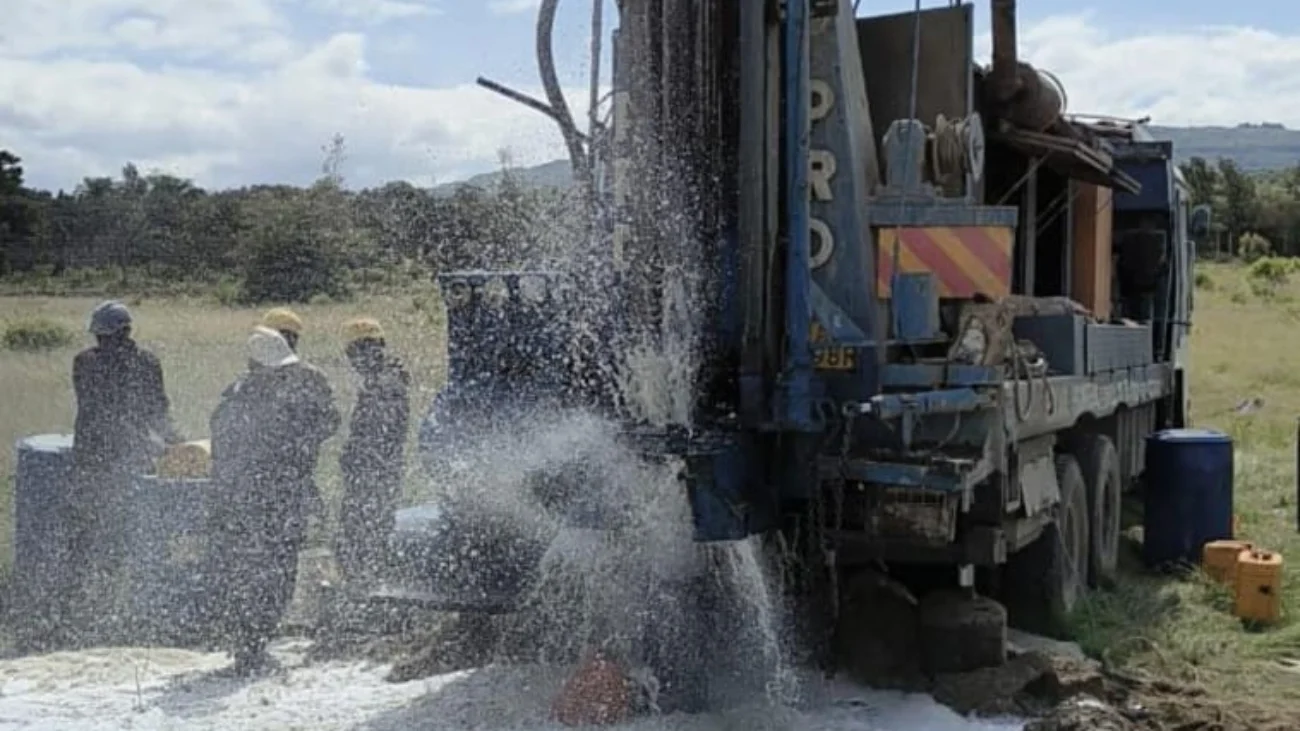
Borehole drilling in Nairobi can provide an independent water source for homes, apartments, schools, institutions, businesses and construction projects. Urban drilling also brings planning challenges: sites can be tightly developed, rigs need safe access, groundwater conditions vary and the finished system must fit around existing infrastructure.
Begin with the water requirement
Define why the property needs a borehole and how much water will be used. A home, apartment block, school and commercial building can have very different demand patterns. Water demand influences pump and storage sizing.
Arrange a hydrogeological survey
Before drilling, a hydrogeological survey assesses groundwater potential and identifies a recommended drilling point. It may also indicate target depth and expected formations.
Check rig access early
In Nairobi, a promising groundwater target may be difficult to reach if there are narrow gates, finished landscaping, nearby buildings or low overhead lines. The survey point and practical drilling setup should be reviewed together.
Understand the regulatory process
WRA’s process includes hydrogeological assessment information and authorization to construct groundwater works before final water-use permitting. Review current WRA requirements.
NEMA also lists groundwater drilling within activities addressed under environmental assessment requirements. Check current NEMA guidance.
Depth and geology affect budget
The cost of drilling depends on actual depth, geology, casing and site access. Online rates are only rough guidance.
For the wider cost picture, read How Much Does Borehole Drilling Cost in Kenya?
Include test pumping in the plan
After drilling and development, test pumping assesses yield, drawdown and recovery. This data helps establish a practical pumping rate and supports pump selection.
Select the pump from total head and demand
Pump installation should consider borehole yield, water level, tank height, pipe length and required flow. A pump selected only from depth may not operate efficiently.
Solarization can also work in urban Nairobi
Solar borehole pumping is not only for remote sites. Nairobi properties with suitable panel space can use daytime solar energy to fill storage and reduce grid dependence.
Plan water storage early
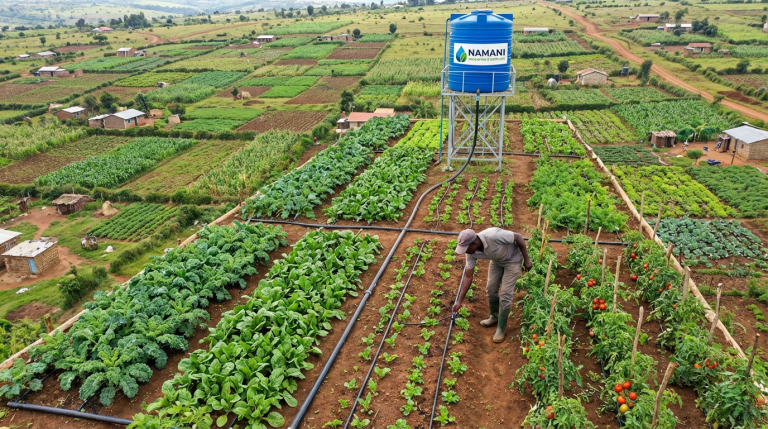
An elevated water tower can provide gravity pressure, while ground storage may suit properties that already use booster pumps. Storage location affects pipe runs and total pumping head.
Nairobi borehole checklist
- Property location and water demand
- Hydrogeological survey
- Current approvals
- Rig access
- Estimated depth
- Casing specification
- Borehole development
- Test pumping
- Pump sizing
- Solar or grid power
- Tank capacity and location
- Completion records and water-quality testing
Use a team that sees the complete system
The strongest projects connect groundwater assessment, drilling, pumping, energy and storage. Treating each stage separately can create expensive mismatches.
Waterline Drillers is based in CBD, Nairobi and provides borehole and water solutions for clients in Nairobi and other locations across Kenya.
Urban access can influence the drilling method and schedule
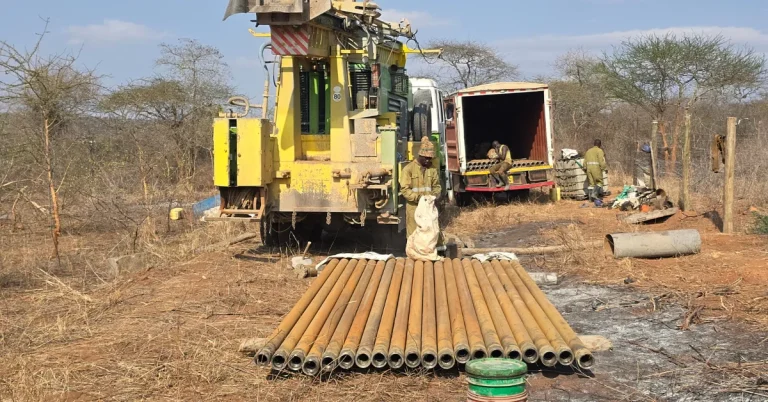
Nairobi properties often have boundary walls, paved compounds, mature landscaping and existing buildings. Before mobilization, the contractor should confirm gate width, turning space, overhead clearance and where the compressor and support vehicles will stand. A drilling rig may need significantly more working room than a normal delivery truck.
If access work such as removing a gate or creating a temporary opening is required, plan it before the rig arrives to avoid unnecessary standby time.
Protect neighbouring property and existing services
Urban sites can contain buried water lines, electrical cables, drainage and septic infrastructure. The drilling location should be checked against known services, and the discharge from drilling and test pumping should be directed safely so that it does not flood neighbouring plots or damage finished surfaces.
Apartment and institutional demand needs careful storage planning
High-density properties may use large volumes during morning and evening peaks. The borehole should not necessarily be sized to supply those peaks directly. A tank can accumulate water over many hours, while a separate distribution system supplies users at the required pressure.
This arrangement allows the borehole pump to operate closer to the tested sustainable rate instead of being selected only for the highest short-term demand.
Consider noise, timing and site coordination
Drilling is an active construction operation involving heavy equipment. On occupied urban properties, coordinate working hours, access and safety with residents, tenants, neighbours or facility managers. Clear site rules reduce disruption and make mobilization easier for the drilling crew.
Plan solar panel space early
If the borehole may be solarized, identify suitable roof or ground space before selecting the final pump and electrical arrangement. Nairobi buildings often have competing roof uses such as water tanks, communications equipment and existing solar systems. Early planning prevents conflicts later.
Keep a complete Nairobi borehole file
- Hydrogeological survey report
- WRA and environmental documentation
- Drilling and casing records
- Test-pumping report
- Water-quality test results
- Pump and motor specifications
- Electrical or solar design information
- Tank and tower details
These records make future pump replacement, troubleshooting, property management and regulatory follow-up much easier.
Frequently Asked Questions
Can a borehole be drilled on a developed Nairobi property?
Often yes, but rig access, overhead clearance, nearby structures and working space must be checked.
How deep is a borehole in Nairobi?
Depth varies by exact site and geology. A hydrogeological survey provides an estimate, while drilling confirms actual conditions.
Can a Nairobi borehole use solar power?
Yes, if suitable panel space is available and the system is sized around the selected pump and water demand.
Planning a borehole in Nairobi?
Waterline Drillers provides complete borehole and water solutions from survey and drilling to pumping, solarization and storage. Contact our team to discuss your site.